
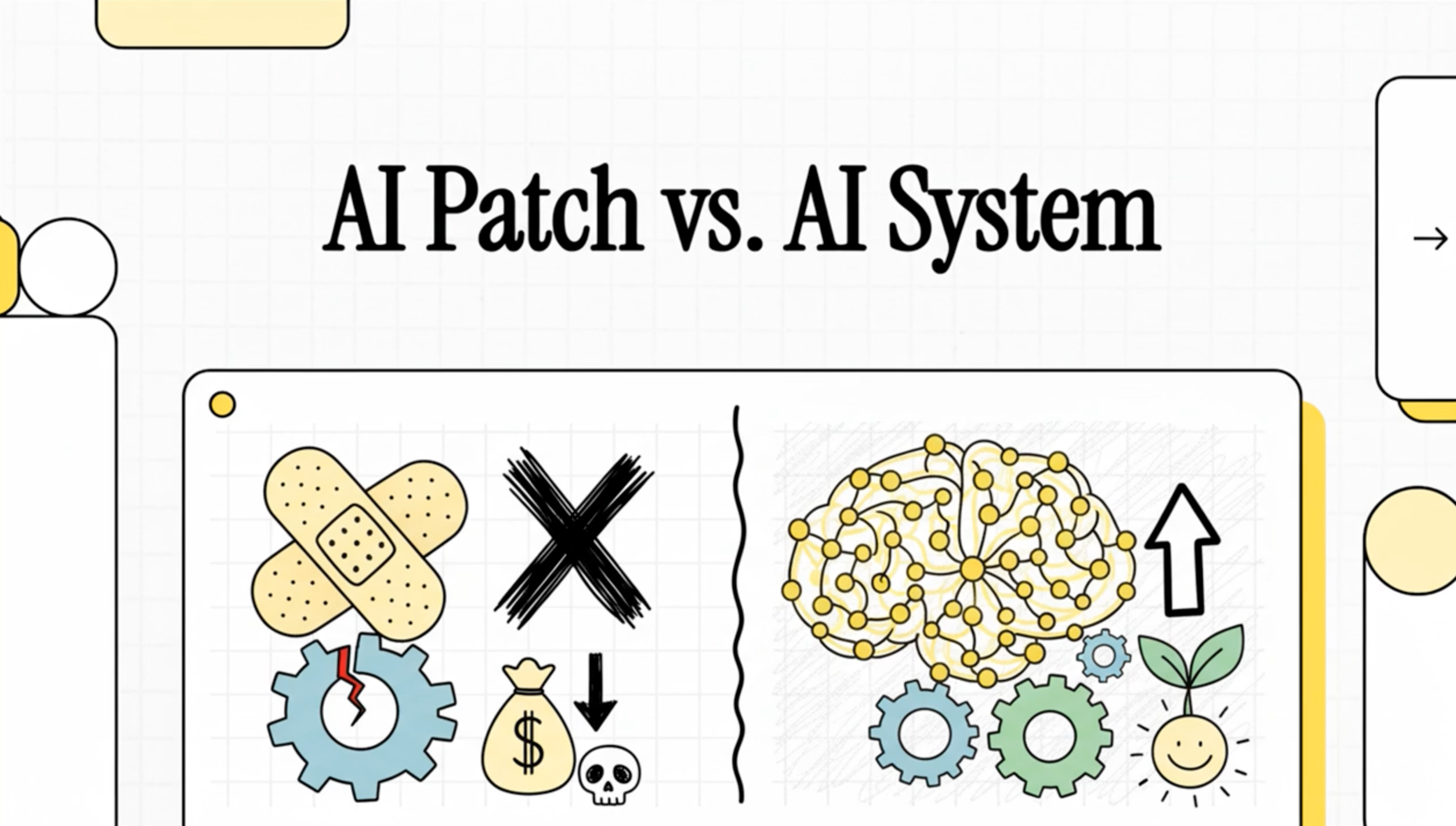
1. Introduction: The Alluring Promise of a Quick Fix – AI health Tourism
In high-stakes industries like health tourism, operational chaos can be crippling. Missed calls after hours, promising leads on WhatsApp going cold after delays, these are not just inefficiencies; they represent a multi-million dollar leak in when we want to integrate AI in Turkish health tourism, specially when clinics often losing 40-60% of their potential revenue before a patient even makes a booking. When faced with these challenges, the promise AI in turkish health tourism can seem like a magical solution.
However, not all AI tools are created equal. While the market is flooded with options, it’s crucial to understand the fundamental difference in their approach. How can you tell the difference between a simple AI ‘patch’ that only covers up a problem, and a true AI ‘system’ that actually solves it?
Let’s explore the first concept: the tempting but ultimately limited AI patch.
2. Understanding the “AI Patch”: AI Systems vs chatbot in healthcare
From an expert perspective, the most common pitfall is the AI ‘patch’, a standalone tool designed to fix one specific, isolated problem. A common example is an “AI Receptionist” meant to handle missed calls. This approach often seems like an easy and direct fix, but it frequently fails to address the deeper, systemic issues that caused the problem in the first place. It covers up a single symptom without curing the underlying disease.
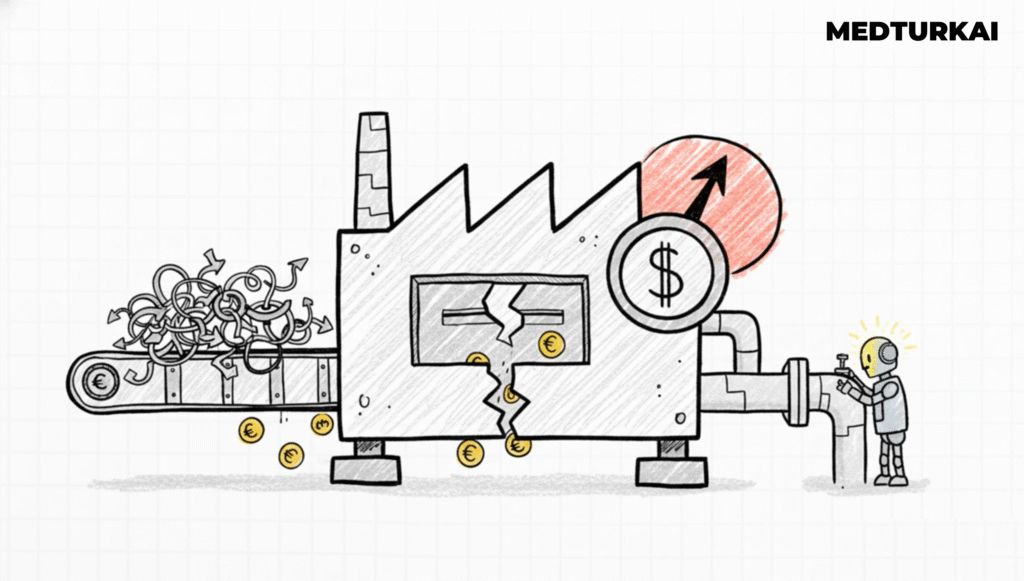
The following case study breaks down the real-world impact of investing in this kind of single-feature solution.
Case Study: The €40,000 AI Trap
| Component | Description | The Insight – ‘So What?’ |
|---|---|---|
| The Investment | A clinic invested +€15,000 for setup and €2,000 per month for support, totaling €40,000+ for year one. | This represents a significant capital outlay for a tool that performs only a single function. |
| The Method | The tool blindly called a list of +2,300 six-month-old phone numbers without knowing their last status. | This is an unstrategic, brute-force approach that disrupts the customer database without intelligence or context. |
| The Result | The campaign yielded a 1.03% “success” rate. | This is an extremely low return on a substantial investment, especially in a market where a single converted patient can be worth over €4,000. |
This example demonstrates how a high-cost patch can create the illusion of innovation while failing to solve the real operational problems. It contrasts sharply with a more comprehensive approach.
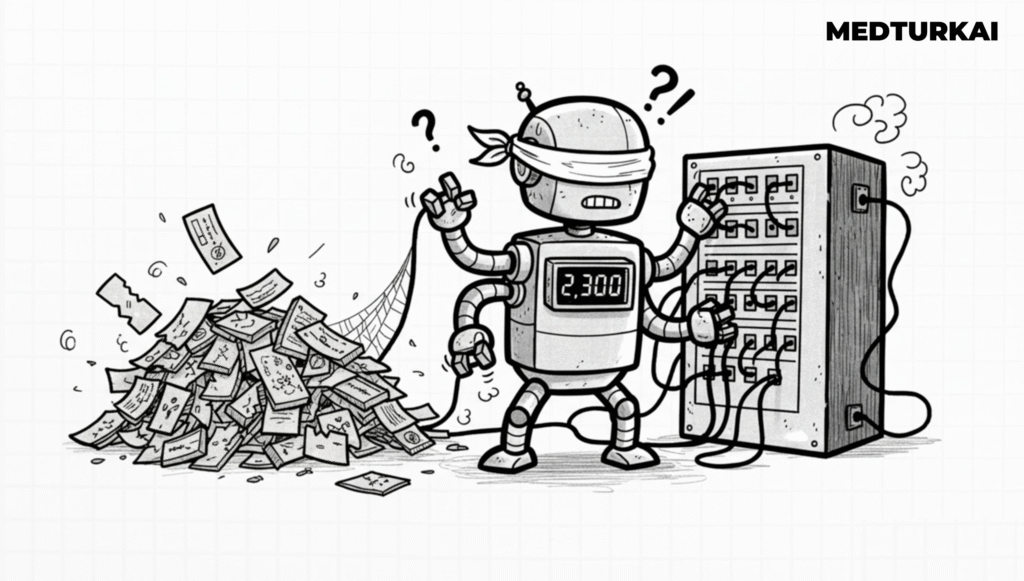
An Article that speaks all the numbers regarding the AI Trap : Link
3. Exploring the “AI Ecosystem”: The Complete System Solution
An “AI Ecosystem” is a comprehensive, integrated system designed to rebuild an entire business workflow to produce guaranteed results. Unlike a patch that fixes one leak, an ecosystem is engineered to find and repair all the fundamental leaks in an operational flow. This systemic approach is designed to solve the real problems the source identifies: sky-high Customer Purchase Acquisition (CPA) costs, chaotic follow-up procedures, and the fundamental operational flaws that jeopardize a high Average Patient Value (APV).
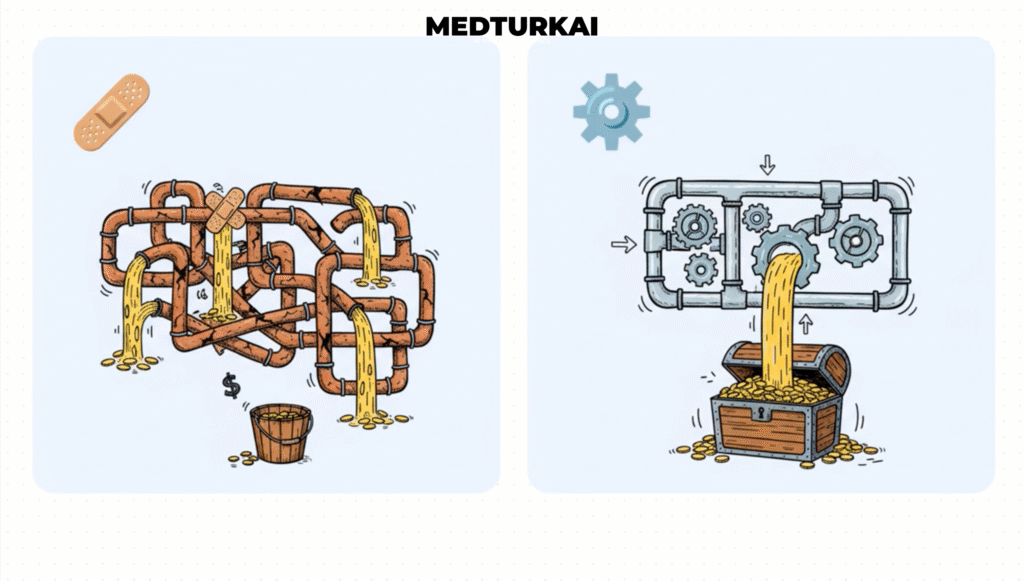
The goal is not just to perform a task, but to transform a process. An AI Ecosystem like EKSENAI delivers value through several interconnected functions:
- Strategic Audits: The process begins by conducting thorough audits to find every leak in the current system. This replaces guesswork with a data-driven diagnosis of all systemic problems.
- Intelligent Automation: Instead of blind dialing, this function deploys automation that qualifies and converts leads based on real-time data, optimizing the entire conversion process.
- Guaranteed Intelligence: Ultimately, an ecosystem provides leaders with the data and insights needed to make informed decisions. It transforms management from a process of “guessing” about performance to “dominating” the market with a clear, evidence-based strategy.
To make these differences even clearer, a direct, side-by-side comparison is useful.
4. At a Glance: AI Patch vs. AI Ecosystem
| The AI Patch (e.g., AI Receptionist) | The AI Ecosystem (e.g., EKSENAI) |
|---|---|
| Focus: Fixing one symptom (e.g., answering calls). | Focus: Solving the entire systemic problem (e.g., the whole patient acquisition flow). |
| Approach: A high-cost, single-function tool. | Approach: A guaranteed system engineered to rebuild your entire flow. |
| Underlying Goal: Stop a single, visible leak. | Underlying Goal: Find and repair all fundamental leaks to increase ROI. |
| Primary Value: Performs a single task. | Primary Value: Delivers strategic audits, intelligent automation, and guaranteed intelligence. |
5. Your Key Takeaway: Are You Treating the Symptom or Curing the Disease?
The distinction between an AI patch and an AI ecosystem comes down to one crucial question: are you trying to treat a single symptom, or are you committed to curing the underlying disease in your business operations? A patch might offer temporary relief, but an ecosystem provides a lasting solution built on a foundation of deep operational understanding.
As you evaluate technology, remember the central question you must ask:
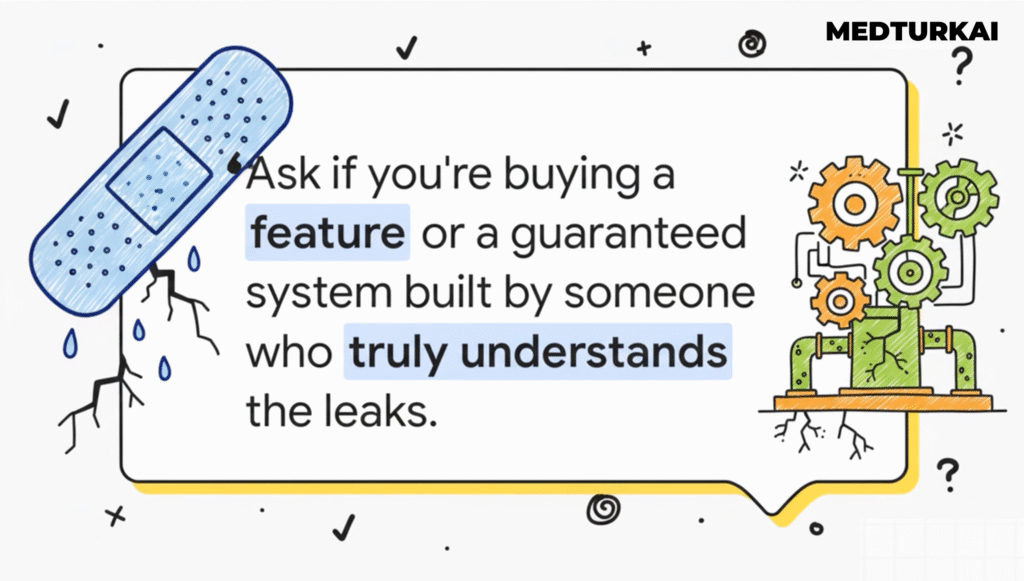
Ultimately, the most effective leaders will be those who look beyond surface-level problems and invest in solutions that address their core business challenges, ensuring sustainable growth and real return on investment.
Leave a Reply