
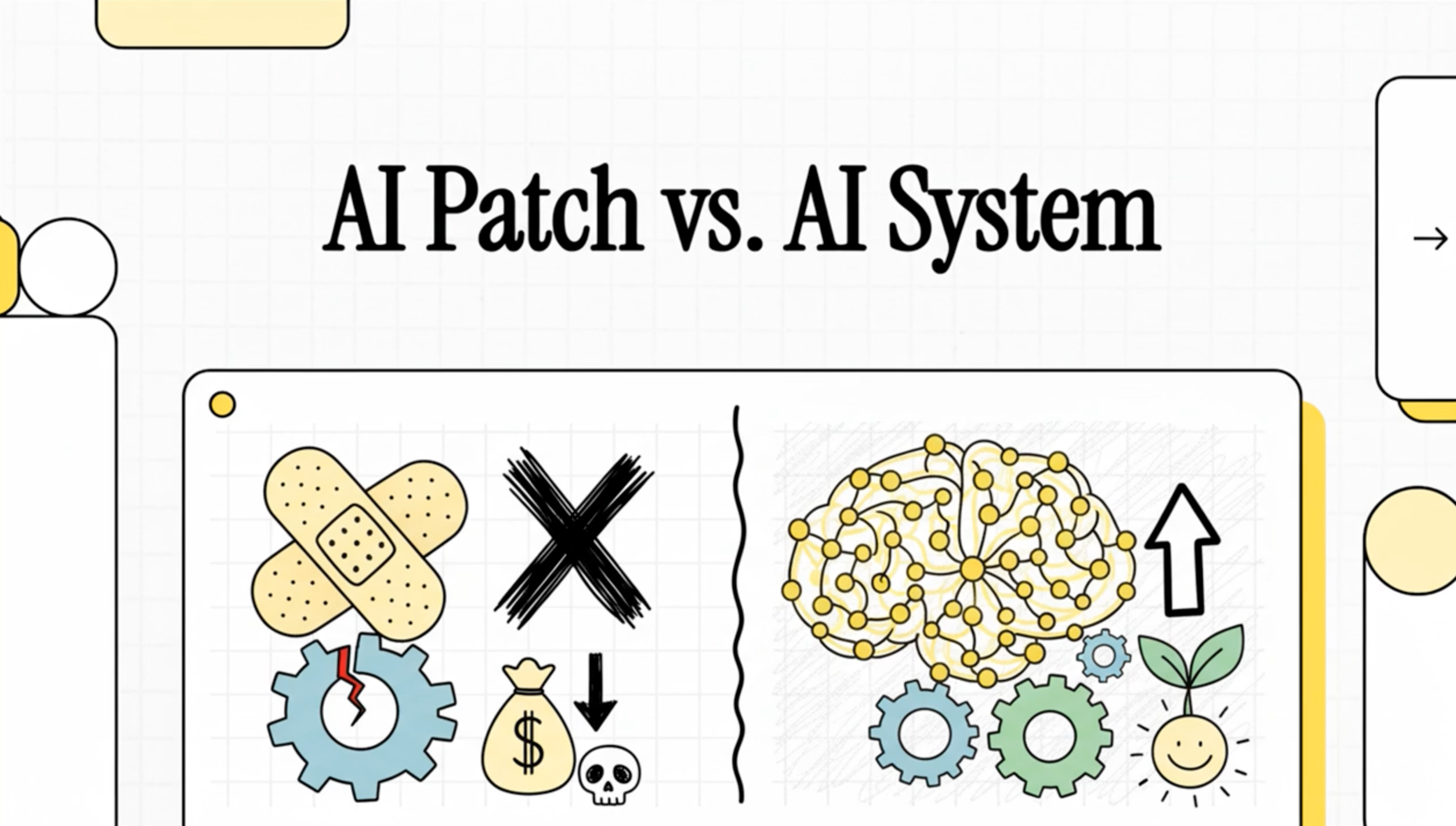
The difference between an AI patch and an AI system is not technical, it is operational. One covers a symptom. The other rebuilds the process that created it. For Turkish health tourism clinics spending €40,000+ per year on tools that return 1% results, this distinction is not academic. It is the difference between capital deployed and capital wasted.
Why Do Turkish Health Tourism Clinics Keep Buying AI Features Instead of AI Systems?
The market pressure is real. Turkish health tourism clinics are losing 40–60% of potential revenue before a patient even books. Missed calls after hours, WhatsApp leads going cold after delays, sales coordinators drowning in volume with tools built for a different era, these are visible operational failures, and the AI tools market has responded with a targeted product for each one.
An “AI Receptionist” addresses missed calls. An “AI Follow-Up Bot” addresses lead dropout. An “AI Scheduler” addresses consultation capacity. Each tool solves one visible problem while leaving the underlying system intact. This is the AI Patch: a single-function tool deployed against a single symptom. It creates the appearance of innovation without changing the operational architecture that produces the symptom in the first place.
The result is a growing category of clinic investments that are individually defensible and collectively ineffective. The demos look impressive. The sales pitch is tight. And the clinic continues losing the same 40–60% of patients through the same structural gaps, now with a higher monthly overhead.
| Metric | Value | Source Context |
|---|---|---|
| Average year-one cost of AI Receptionist tools | €40,000+ | €15,000 setup + €2,000/month support, Turkish clinic implementation data |
| Success rate from blind cold-call AI demo | 1.03% | 2,300 six-month-old numbers dialed without status verification |
| Revenue leakage before patient booking | 40–60% | Turkish health tourism operational data across clinic intake processes |
| Average Patient Value in Turkish medical tourism | €4,000+ | Procedure value across standard medical tourism segments in Istanbul |
| Patient inquiries lost to slow or absent response | Majority of unaddressed leads | Operational observation, Turkish health tourism intake workflows |
What Does an AI Ecosystem Actually Do That a Patch Cannot?
An AI Ecosystem is not a better AI Receptionist. It is a fundamentally different type of investment. Where a patch addresses one symptom, an ecosystem audits the entire operational flow, identifies every revenue leak, and rebuilds the process from intake to conversion around the goal of guaranteed ROI. The three core functions: Strategic Audits, Intelligent Automation, and Guaranteed Intelligence, are not features. They are a system architecture.
1. What Is a Strategic Audit and Why Doesn’t an AI Patch Run One?
A Strategic Audit begins by mapping where patients are dropping out of the pipeline before the clinic ever knows they were there. It identifies the percentage of WhatsApp inquiries going unanswered past 60 minutes. It finds the point in the consultation flow where lead-to-deposit conversion collapses. It locates the specific bottlenecks, not by guessing, but by instrumenting the actual patient journey with data.
An AI Patch does not run audits. It is sold against a pre-defined problem: “you miss calls, this answers them.” It does not ask whether call volume is the actual constraint, whether the problem is response quality, or whether the patients calling are even qualified. The audit is the step that distinguishes a system intervention from a product purchase.
2. What Is Intelligent Automation vs. Blind Dialing?
The €40,000 case study demonstrates blind dialing at its most expensive: 2,300 phone numbers, six months old, called without any knowledge of where each contact was in the pipeline, what their last interaction was, or whether they had already converted at a competitor. The outcome — 1.03% “success”, is not a failure of AI. It is a failure of the operational logic behind the deployment.
Intelligent Automation is the opposite. It operates on real-time data: which leads have not been contacted in the last 48 hours, which consultation-stage patients have not confirmed, which post-inquiry leads have gone silent and require a specific follow-up sequence. The automation responds to the current state of the patient, not to a static list. The conversion rate difference is not incremental, it is structural.
3. What Is Guaranteed Intelligence and Why Does It Change the ROI Math?
Guaranteed Intelligence means the clinic’s leadership has a live operational view of where patients are, where they are dropping off, and what the conversion rate looks like at every stage from first contact to paid deposit. This information layer is what separates a clinic that is guessing about performance from one that is managing it.
The ROI math changes because the information changes the decisions. When a clinic director knows that 65% of leads receive a first response more than four hours after initial contact, they can intervene with precision. When they do not have that data, the instinctive response is to buy more leads, which multiplies the failure rate at proportionally higher acquisition cost. Guaranteed Intelligence makes the correct intervention visible before the damage compounds.
What Is the Underlying Principle Most Turkish Clinic Leaders Miss?
The AI Patch is not a bad product. It is the wrong product for the problem. The problem is not that clinics lack a tool to answer one type of inquiry, it is that the operational architecture connecting patient acquisition to patient conversion is broken in multiple places, and each broken place is invisible without instrumentation.
The clinic that spends €40,000 on an AI Receptionist and gets 1.03% conversion has not failed to deploy AI. It has failed to diagnose its own system before buying a solution. The correct sequence is audit first, then build. Understand where revenue is leaving the pipeline, then construct the automation layer that closes each specific gap. A system built this way generates guaranteed ROI because it is built against a known failure map, not against a feature brochure.
The distinction between an AI Patch and an AI Ecosystem is ultimately a distinction between reactive purchasing and strategic building. The clinics that will dominate Turkish health tourism’s next growth cycle are not the ones that bought the most AI tools. They are the ones that built the most coherent operational system, and then used AI to run it at scale.
Frequently Asked Questions
What is an AI Patch in the context of Turkish health tourism?
An AI Patch is a single-function tool deployed to address one specific operational symptom, an AI Receptionist that answers missed calls, a bot that sends follow-up messages, a scheduling tool that automates consultations. Each patch solves one problem in isolation without addressing the structural operational failures that produce the symptom. The result is a collection of tools that individually appear to add value while collectively failing to stop revenue leakage at the system level.
Why did the €40,000 AI Receptionist investment return only 1.03% results?
The failure was not the AI technology, it was the operational logic behind the deployment. Blind dialing 2,300 six-month-old phone numbers without knowing each contact’s current pipeline status, last interaction, or conversion stage is not a strategy. Intelligent Automation operates on real-time patient state data, not static lists, which produces conversion rates in a fundamentally different range.
What does an AI Ecosystem include that an AI Patch does not?
An AI Ecosystem includes three integrated functions: Strategic Audits that map every revenue leakage point in the existing intake flow; Intelligent Automation that responds to real-time patient data rather than static contact lists; and Guaranteed Intelligence that gives leadership a live operational view of pipeline performance at every stage. These three functions work together as a system architecture, not as standalone features.
How do clinic leaders know if they need an AI Ecosystem rather than a single AI tool?
The diagnostic question is: do you know what percentage of your patient inquiries receive a competent response within 60 minutes, and do you know where in your pipeline your conversion rate collapses? If the answer is no, if your performance data is vague, delayed, or nonexistent, you have a system problem. What is required is an operational audit that instruments the patient journey and makes the failure points visible before any automation is deployed.
Leave a Reply